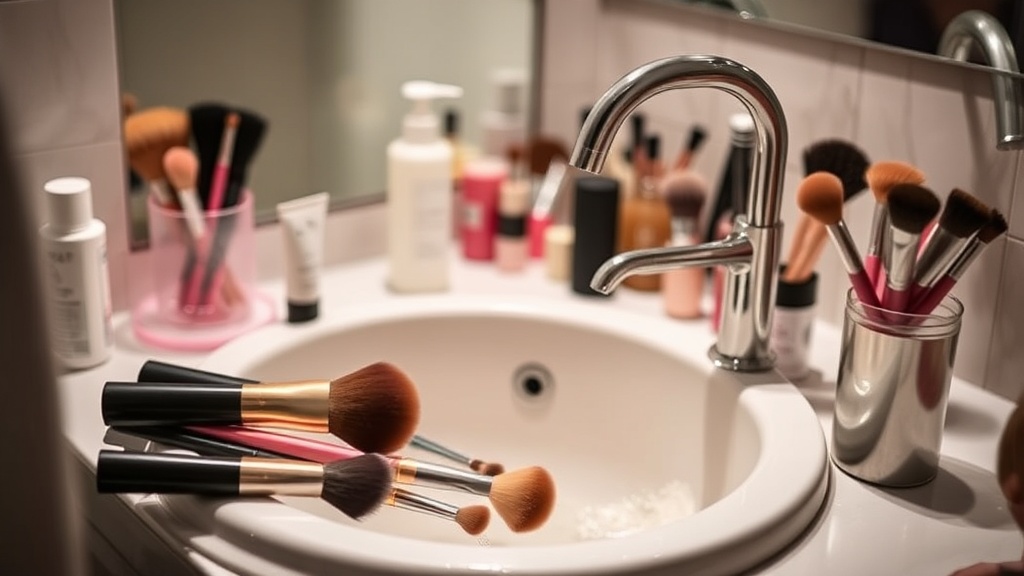
Refresh Your Makeup Brushes Without a Messy Sink

You'll learn how to clean your makeup brushes effectively using a streamlined system that avoids the typical sink-clogging mess. This method focuses on protecting your tools, preserving your skin, and saving time by using a controlled, tabletop approach rather than the standard "scrub and rinse" method that often results in water damage or a messy bathroom counter.
Let's be honest: most of us treat brush cleaning like a chore we'll get to "eventually." But if you're using a brush that's caked in dried foundation, you're not just applying a bad finish—you're potentially introducing bacteria to your skin. It's a math problem, really. A $15 brush from Ulta or Sephora can last years if you treat it right, but a dirty brush ruins the quality of even the most expensive cream blush.
How Often Should You Clean Makeup Brushes?
You should clean your foundation and concealer brushes once a week, while powder and blush brushes can go every two to three weeks. The frequency depends entirely on the product type. Liquid and cream products—think liquid foundations, cream shadows, or tinted moisturizers—are breeding grounds for bacteria because they contain moisture and oils.
If you use a dense brush for a heavy foundation every single morning, that brush is going to get "gunked up" much faster than a dry powder brush. I always tell my clients that consistency is better than intensity. It's much easier to do a quick 5-minute clean once a week than a massive, deep-clean session once every three months when the bristles feel like straw.
Here is a quick reference guide for your routine:
| Brush Type | Product Type | Cleaning Frequency |
|---|---|---|
| Foundation/Concealer | Liquid/Cream | Once a week |
| Eyeshadow | Powder | Every 2 weeks |
| Blush/Bronzer | Powder | Every 2–3 weeks |
| Lip Brushes | Cream/Liquid | After every use |
What is the Best Way to Clean Makeup Brushes Without a Mess?
The best way to clean brushes without a mess is to use a handheld silicone scrubbing pad and a small, controlled amount of water in a shallow bowl or a dedicated sink protector. Instead of holding the brush under a running faucet—which is how water gets into the ferrule and ruins the glue—you'll use a "wet-to-dry" method on a flat surface.
The biggest mistake people make is letting water run down the handle. That water enters the ferrule (the metal part that holds the bristles) and dissolves the adhesive. Once that glue dissolves, your brush is useless. It's a waste of money. If you want to protect your tools, you have to keep the water away from the neck.
The "No-Sink" System:
- The Setup: Grab a small, shallow bowl or a ceramic plate. Fill it with just enough lukewarm water to cover the bottom—no more than an inch deep.
- The Soap: Add a drop of a gentle, pH-balanced cleanser. You don't need a specialized "brush soap" every time; a gentle, unscented liquid soap works perfectly fine.
- The Scrub: Use a silicone cleaning mat (you can find these at most beauty retailers). Place the mat on your counter or inside your shallow bowl.
- The Motion: Swirl the brush in a circular motion on the silicone texture. Do not press too hard—you don't want to pull the bristles out.
- The Rinse: Instead of running the tap, dip the bristles into your shallow bowl of clean water and swirl.
- The Dry: This is where the mess usually happens. Instead of a towel, lay the brushes flat on a clean surface or a dedicated brush drying rack.
I've seen so many people try to "air dry" brushes by standing them upright in a cup. Don't do that. If water drips down into the handle, you've just shortened the life of that brush significantly. Always lay them flat or hang them bristles-down. It's a small detail, but it's the difference between a tool that lasts six months and one that lasts six years.
Speaking of longevity, if you're already looking at your vanity and realizing your tools are looking a bit worn, you might want to check out how to keep your silk blouses looking new—the logic of garment and tool care is actually quite similar. It's all about preventing the damage before it happens.
Why Is It Important to Clean Brushes Regularly?
Regular cleaning prevents skin breakouts and ensures your makeup application remains seamless and high-quality. When old, dried product builds up in the bristles, the brush loses its ability to pick up pigment and distribute it evenly. You'll end up with streaks, patches, and a "cakey" look that no amount of blending can fix.
More importantly, there's the hygiene aspect. Makeup brushes can collect dead skin cells, sebum, and environmental dust. If you use a dirty brush on your face, you're essentially rubbing yesterday's debris into your pores. This can lead to irritation or even minor infections if you have an active breakout. It's not just about looking good; it's about skin health.
If you're someone who follows a strict morning routine, like those who use a 10-minute morning outfit system, you know that efficiency is key. A clean brush makes your makeup application much faster. You won't spend ten minutes trying to blend out a patch of foundation that's actually just a clump of old product.
Pro-Tip: If you're in a rush and can't do a full wash, use a quick-drying brush spray. These are great for a mid-week refresh, but they aren't a replacement for a deep clean. They are a temporary fix to keep the bristles moving, not a long-term solution.
The "Dry-Down" Rule: Never, under any circumstances, use a hairdryer to speed up the drying process. The heat is far too intense for synthetic or natural hair bristles and can warp the shape of the brush permanently. Let them air dry naturally on a flat surface.
When you're setting up your cleaning station, keep it minimal. You don't need a dozen different solutions. A single bowl, a silicone mat, and a mild cleanser are all you need to maintain a professional-grade toolkit. It's about working smarter, not harder. You've already mastered the art of building a practical wardrobe; applying that same logic to your beauty tools is just the next logical step.