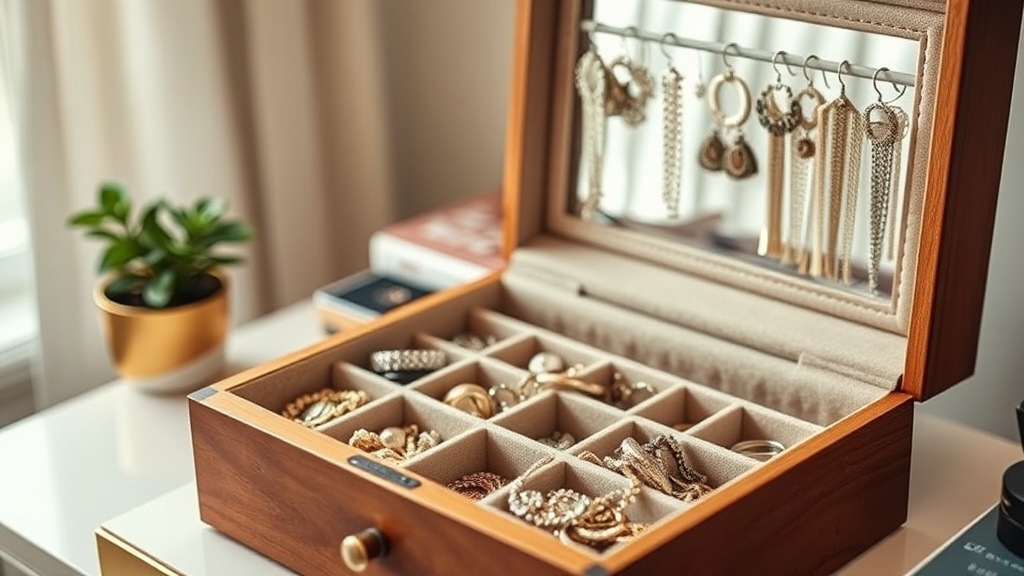
Organize Your Jewelry Box Using the Vertical Method

Are you tired of digging through a tangled mess of necklaces just to find one matching earring?
Most women treat their jewelry boxes like a junk drawer—a deep, dark place where gold chains go to die and earrings disappear forever. This post explains how to implement the vertical method of organization to save your time and your jewelry. You'll learn how to categorize by type, use vertical space to prevent tangles, and select the right storage tools without overspending on flashy jewelry organizers.
I've spent years looking at professional wardrobes and personal collections. The math is simple: if you can't see it, you won't wear it. A disorganized box leads to wasted money on "new" pieces that you actually already owned but couldn't find. It also leads to damaged items—scratched metal or snapped chains—because things are being crushed at the bottom of a pile.
How Do I Prevent Necklace Tangling?
The most effective way to prevent necklace tangling is to hang each piece individually using vertical spacing. When you pile necklaces in a tray, the friction and movement cause knots that are nearly impossible to untangle without breaking the chain. Instead, use a stand or a wall-mounted rack where each necklace has its own "lane."
If you don't want to mount something to your wall, look for a tiered stand. Think of it like a ladder for your jewelry. By ensuring there is at least an inch of space between each hook, you prevent the metal loops from interlocking. This is a practical way to manage your collection without needing a professional-grade display case.
The Vertical Hierarchy of Jewelry Storage:
- Tier 1: Earrings. Use small velvet trays or earring cards to keep studs upright.
- Tier 2: Rings. Use slotted ring rolls to keep them from rolling around or getting lost.
- Tier 3: Bracelets/Bangles. Use a vertical T-bar stand to keep them upright and visible.
- Tier 4: Necklaces. Use a hanging rack or a stand with multiple hooks to create vertical distance.
It's a small investment in organization that keeps your high-quality pieces looking like new. Speaking of maintenance, if you have delicate jewelry, you might want to keep your silk blouses looking new to ensure your whole outfit remains pristine.
What Are the Best Jewelry Storage Tools?
The best jewelry storage tools are those that prioritize visibility and protection over aesthetic "fluff." You don't need a $200 marble box to stay organized. You need a system that allows you to see every single item at a glance. A transparent acrylic organizer or a velvet-lined tray is often more useful than a heavy wooden chest where everything is buried.
When shopping, look for materials that won't react with your metals. For example, if you own a lot of sterling silver, you want to avoid cheap plastics that might off-gas or cause tarnishing. Check the Wikipedia entry on jewelry organizers if you want to research the different types of specialized storage materials available on the market.
| Storage Type | Best For | The Pro/Con |
|---|---|---|
| Vertical Stand | Necklaces & Bracelets | Great visibility; takes up more surface area. |
| Velvet Trays | Earrings & Rings | Protects delicate metals; can't see "depth." |
| Acrylic Drawers | Small Items/Studs | Easy to see everything; can look a bit clinical. |
| Travel Roll | Daily Essentials | Highly portable; limited capacity. |
Don't get distracted by the "pretty" sets you see on social media. A lot of those sets are actually quite impractical because they prioritize looks over accessibility. If a jewelry box looks beautiful but you can't find your favorite gold hoop in under thirty seconds, it has failed its primary job.
How Do I Organize My Jewelry by Category?
Organize your jewelry by grouping items by metal type and then by occasion. This creates a logical flow when you are getting dressed and prevents you from grabbing a mismatched set. Start by sorting your collection into three main buckets: everyday metals (like gold-filled or stainless steel), statement pieces (for events), and delicate/fine jewelry.
Once you have your categories, apply the vertical method to each. For your everyday gold hoops or silver studs, use a small tray. For your statement necklaces, use a dedicated hook. This way, you aren't digging through your fine pearls to find your casual necklace. It’s about creating a system where your brain knows exactly where to look based on the "vibe" of your outfit.
A quick tip: if you have a lot of small items like earring backs or tiny charms, use a small-compartment pill box or a specialized bead organizer. It’s much more efficient than a single large tray where things get lost in the corners. (I've seen so many women lose expensive diamond studs because they were sitting in a large, deep box!)
If you're already in the habit of organizing your accessories, you might also want to refresh your makeup brushes to keep your vanity area cohesive. A clean vanity is a productive vanity.
The Vertical Method Step-by-Step:
- Empty and Sort: Take everything out of your current box. Group them by type (rings, necklaces, earrings, bracelets).
- Clean: Use a soft cloth to clean any tarnished pieces before putting them away.
- Assign a "Home": Every item needs a specific spot. If it's a necklace, it goes on a hook. If it's a ring, it goes in a slot.
- Implement Verticality: Use stands or tiered trays to ensure no item is resting directly on top of another.
- Audit Monthly: Once a month, check your "homes." If a ring has migrated to the earring tray, put it back.
The goal isn't to have a museum-quality display. The goal is to have a functional tool that makes your morning routine faster. When you can see your gold chain hanging clearly on a stand, you're more likely to wear it, and you're less likely to accidentally break it by pulling it out of a messy pile.
Think about the math of your wardrobe. A $15 vertical necklace stand from a place like Target or even a thrift store is a better investment than a $100 decorative box that doesn't actually solve your tangling problem. Efficiency wins every time.
When you're choosing your storage, remember that your jewelry is an extension of your personal style. Whether you prefer the minimalist look of a single wooden stand or the high-capacity look of an acrylic tower, make sure it serves your actual needs. If you're someone who wears a lot of heavy-duty watches or thick bangles, don't try to cram them into a delicate earring box. Match the strength of the storage to the weight of the jewelry.
It's a simple shift in how you view your accessories. You aren't just "storing" them; you're managing an inventory. Once you treat your jewelry like the valuable assets they are, you'll find yourself wearing them more often and keeping them in better condition for years.
Steps
- 1
Sort by Frequency of Use
- 2
Utilize Vertical Hooks
- 3
Separate Metals to Prevent Tarnishing
- 4
Label Your Small Trays