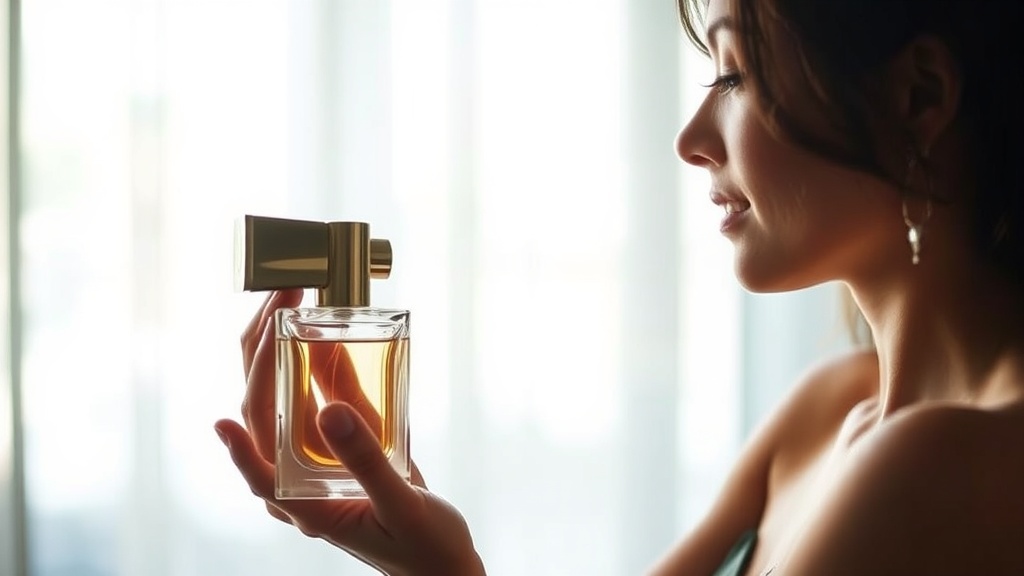
Why Your Perfume Fades So Quickly

The Science of Scent Longevity
You apply a generous spray of your favorite Eau de Parfum at 8:00 AM, but by your 11:00 AM coffee meeting, the scent has completely vanished. You might assume the fragrance is low quality or that you simply didn't use enough, but the reality is often a matter of chemistry and application technique rather than the price tag of the bottle. Understanding how fragrance interacts with your skin, your environment, and your routine is the most efficient way to ensure your signature scent actually lasts through your workday. This post breaks down the technical reasons why perfume fades and provides a practical system for making your scents more durable.
Fragrance is not a static product; it is a volatile chemical compound that begins to evaporate the moment it touches your skin. To get the most value out of your collection, you need to treat scent application with the same systematic approach you use for your skincare or wardrobe maintenance. We are moving away from the idea of "more is better" and moving toward "application is smarter."
The Concentration Gap: Parfum vs. Eau de Toilette
The most common reason a scent disappears is a misunderstanding of what is actually inside the bottle. Fragrances are categorized by their concentration of perfume oils, which directly dictates how long the scent will linger on your skin. If you are buying an Eau de Toilette (EDT) and expecting it to last eight hours, you are fighting a losing battle against chemistry.
- Eau de Cologne (2-4% oil): These are highly volatile and usually last only 1 to 2 hours. They are designed for a quick refresh, not for a full day of wear.
- Eau de Toilette (5-15% oil): These are lighter and often feature more citrus or green notes. They typically last 3 to 4 hours.
- Eau de Parfum (15-20% oil): This is the standard for most high-quality fragrances. You can expect 5 to 8 hours of longevity depending on the base notes.
- Parfum/Extrait (20-40% oil): This is the most concentrated form. It is heavier, more expensive, and can last 12+ hours.
When shopping, look specifically at the concentration. If you have a long day of back-to-back meetings or an evening event, an Eau de Parfum is a much more practical investment than an EDT, even if the price per milliliter is higher. You are paying for the oil, which is the part that actually stays with you.
The Role of Skin Hydration and pH
Fragrance needs a surface to "grip" onto. If your skin is dry, it will absorb the alcohol and the oils too quickly, or the scent will simply evaporate into the air because there is no moisture to anchor it. This is the same reason why foundation can look cakey by midday; without proper preparation and hydration, the product cannot sit correctly on the surface.
To fix this, you must create a moisture barrier before applying your scent. A highly effective, low-cost method is to apply an unscented moisturizer or a thin layer of petroleum jelly (like Vaseline) to your pulse points before spraying. The lipids in the moisturizer act as an anchor for the perfume oils, slowing down the evaporation process. For example, if you are wearing a heavy, woody scent like Santal 33, applying it over a neutral shea butter will significantly extend its life compared to applying it to bare, dry skin.
Additionally, your skin's pH level plays a role. If your skin is highly acidic, it can break down the molecular structure of certain notes faster. This is why a fragrance might smell incredible on a friend but disappear or change drastically on you. While you cannot easily change your pH, you can control the environment by ensuring your skin is well-hydrated and not overly irritated by harsh soaps immediately before application.
Strategic Application: Pulse Points and Friction
Where you apply your perfume is just as important as how much you use. Most people are taught to spray their wrists, but the way we use our hands often destroys the scent. If you spray your wrists and then rub them together, you are creating heat through friction. This heat breaks down the top notes—the initial, lighter scents like bergamot or neroli—and forces the fragrance to skip straight to the middle and base notes. This is a waste of the complexity of the perfume.
Instead, follow these professional application rules:
- Target Pulse Points: Apply to areas where the blood vessels are closest to the skin, creating natural warmth. These include the wrists (without rubbing), the sides of the neck, behind the ears, and the inner elbows.
- The "Mist and Walk" Fallacy: Many people spray a cloud of perfume and walk through it. This is an inefficient use of product. Most of the fragrance lands on your clothes or the floor rather than your skin. For a scent to develop its intended profile, it needs to interact with your body heat.
- Layering with Textures: If you want a scent to last all day, consider applying it to your clothing as well. However, be cautious with delicate fabrics like silk or light-colored cotton to avoid staining. Spraying the lining of a blazer or a wool scarf can provide a long-lasting scent trail that isn't as dependent on your skin chemistry.
Environmental Factors and Storage Mistakes
You might be blaming your skin when the real culprit is your bathroom cabinet. Most people store their perfume on a vanity or a bathroom shelf, which is the worst possible place for fragrance longevity. The constant fluctuations in temperature and humidity from your daily shower act as an accelerant for chemical degradation.
Heat, light, and moisture are the three enemies of perfume. When exposed to these elements, the chemical bonds in the fragrance break down, causing the scent to go "flat" or even smell rancid. This is a structural failure of the liquid itself. To prevent this, treat your perfume like a high-end investment piece. Store your bottles in a cool, dark place—such as a bedroom drawer or a dedicated cabinet—away from direct sunlight and bathroom steam. A well-stored bottle of Chanel or Jo Malone will maintain its integrity for years, whereas one left on a sunny windowsill may lose its potency within months.
The "Nose Blindness" Factor
Sometimes, the perfume hasn't actually faded; you have simply become "nose blind" to it. This is a phenomenon known as olfactory fatigue. Your brain is designed to filter out constant stimuli to remain alert to new changes in your environment. When you wear the same scent every day, your olfactory system begins to treat it as "background noise" and stops sending the signal to your brain.
If you find yourself constantly reapplying throughout the day, stop and check with a colleague or a friend first. They may be able to smell you clearly, which is a sign that you are over-applying. Over-applying can be intrusive to others and actually leads to faster evaporation. If you want to avoid olfactory fatigue, rotate your fragrances. Instead of wearing one scent for a month, cycle through three or four different scent profiles—such as a bright citrus for mornings, a floral for afternoons, and a deep amber for evenings. This keeps your senses engaged and prevents your brain from tuning the scent out.
Summary Checklist for Maximum Scent Longevity
To ensure your fragrance performs as intended, implement this practical system:
- Check the Concentration: Opt for Eau de Parfum or Parfum for long-wear days.
- Prep the Surface: Apply unscented lotion or a tiny amount of petroleum jelly to pulse points first.
- Avoid Friction: Spray and let dry; never rub your wrists together.
- Strategic Placement: Focus on the neck, ears, and inner elbows to utilize body heat.
- Protect the Investment: Move your bottles out of the bathroom and into a cool, dark drawer.
- Rotate Scents: Switch up your fragrance profile to prevent olfactory fatigue.
Style is about making smart, efficient choices. By understanding the mechanics of how your perfume works, you stop wasting money on products that don't perform and start building a more intentional, polished presence.