
The Permission Lie: How Women Dress for Moments That Actually Matter

I watched it happen hundreds of times.
A woman would walk into my office for a performance review, a difficult conversation, a salary negotiation—and before she even sat down, she'd say something like: "Sorry, I'm such a mess today" or "I know I look tired" or "I didn't have time to put myself together."
The apology came before the conversation. Almost without exception.
I spent a decade in HR watching women pre-apologize for their appearance before advocating for themselves. And I started to notice the pattern: the apology wasn't really about the outfit. It was a permission slip. She was asking me—before she'd said a single word about the actual reason she was there—whether she was allowed to be taken seriously.
That's the permission lie. And in my experience, it costs women more than any overpriced blazer ever could.
Where This Comes From
The permission lie isn't a character flaw. It's a system we were handed.
Diet culture spent decades teaching us that our bodies aren't right yet—but if we work hard enough, we'll earn the right to look good. Fashion marketing has built its entire model on the premise that the correct outfit signals the correct status, and if you don't have it, you don't belong. Social media—Instagram in particular—trained a generation to treat confidence as aesthetic: a certain color palette, a particular silhouette, a specific price point.
Somewhere in there, a lot of us started believing that empowerment was something you could purchase. That the right blazer would finally make the anxiety stop. That the right shoes would make you walk differently into the boardroom.
They won't. I've worn $800 heels into difficult conversations and lost. I've worn a $34 ponte trouser from Target with a clean hem into difficult conversations and won. Those are my numbers—yours will look different—but the principle held up across every performance review I ever ran. The heels didn't do the work. I did.
The Real Cost
The mental loop of am I dressed right? is expensive.
Not in dollars—in bandwidth. Every morning spent cycling through variations of "is this professional enough / too much / not enough / the wrong color / making me look like I'm trying too hard / not trying hard enough" is morning energy that doesn't go toward the actual work.
I've done the math in my own life. On the days I'm second-guessing myself in a mirror at 7:45 AM, I walk into work already behind. Already slightly apologetic. Already looking for validation before I've done anything that requires it.
And that's before anyone's even looked at me.
The permission lie doesn't just steal your confidence in the moment. It steals the hours and mental energy leading up to the moment. It's the invisible tax on getting dressed—and based on what I witnessed across ten years of HR, women pay it disproportionately, and mostly in silence.
Four Rules That Opt Out of the Whole System
I'm not here to tell you that clothes don't matter. They do. But they matter for different reasons than we've been told. Here's what I've actually found to be true:
Rule 1: Fit before price. Always.
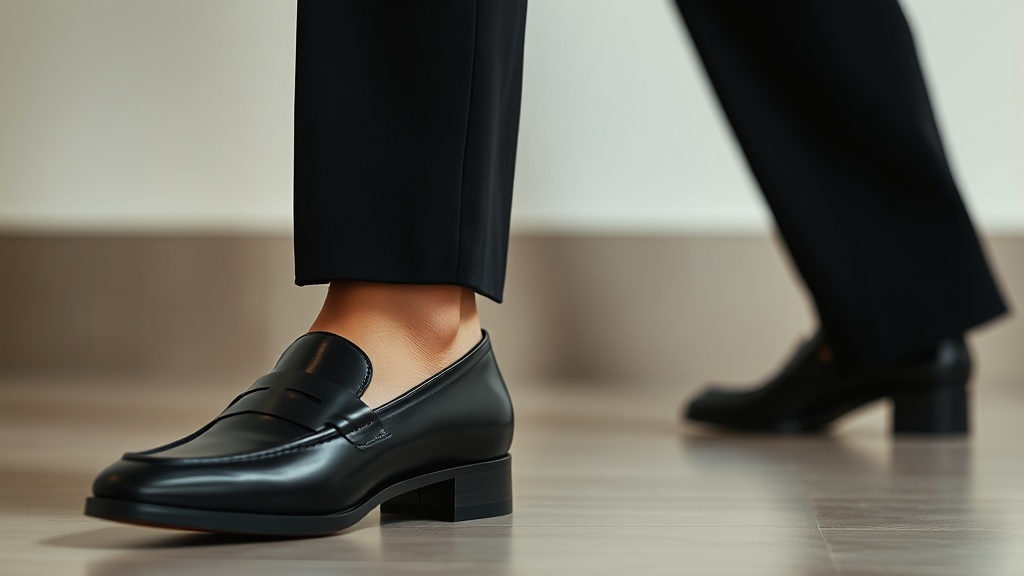
A $28 hemmed trouser beats a $1,200 bag every single time for presence. Why? Because fit signals that you paid attention to yourself. Not to the label—to you. The tailored inseam is the detail that reads as "I showed up intentionally" even when nothing else in the outfit costs more than forty dollars. Get the hem. Skip the bag.
Rule 2: One element that is unmistakably, specifically you.
Not trendy. Not aspirational. You. For me, it's a color (terracotta, specifically). For a woman I managed for years, it was always interesting earrings. One thing that isn't trying to be neutral, professional, acceptable. One thing that announces something about who you actually are. This is what people remember. This is what makes "professional" feel like your version of professional, not a costume you borrowed.
Rule 3: Comfort is non-negotiable. Not a luxury.
You cannot feel powerful while adjusting a strap, yanking at a hem, or worrying about whether your waistband is cutting into you by noon. I don't care how objectively "good" something looks—if it requires management, it's working against you. Comfort isn't about wearing sweats to a meeting. It's about choosing clothes that do their job without demanding your attention. When your outfit disappears—when you stop thinking about it halfway through the morning—that's when it's actually doing its job.
Rule 4: One elevated piece in a sea of accessible ones.
This is where people get it backward. They think confidence comes from an entirely expensive outfit. It doesn't. It comes from one intentional choice surrounded by simple, well-fitting basics. One great coat. One ceramic necklace that cost sixty dollars and looks like nothing else in the room. The contrast between the one real thing and the practical everything else is actually more interesting—and more confident—than wearing all the things at once. It says: I chose this. Not: I bought this.
IWD and the Transaction Trap
Every year around International Women's Day, the shopping emails start. Empower yourself. Shop the collection. Fifty percent off on "confidence." Limited edition "strong woman" tote bags.
I don't blame the brands for trying. But I want to name the trick clearly: empowerment cannot be purchased. And yet we keep treating it like a transaction—as if the right item is the missing piece between who we are and who we're allowed to be.
IWD started as a labor movement—rooted in the early 20th century, formally recognized by the United Nations in 1977. Women organizing for wages, for rights, for the basic argument that they deserved to be treated as people. That's not a small thing. That's women deciding they didn't need permission to be present—they were already present.
The version we've landed on—where empowerment is a sale and confidence is a blazer colorway—isn't wrong exactly. But it's a dilution. It quietly accepts the premise that you need to earn the right to feel capable.
You don't.
What Actually Changes When You Opt Out
When I stopped asking whether I was dressed right—and started asking whether I was dressed for me—something shifted that had nothing to do with my wardrobe.
I stopped apologizing. Not perfectly. Not all at once. But the reflex of pre-emptive self-diminishment got quieter. Because the loop that used to run is this enough / am I enough ran into a wall: I had already decided. The outfit wasn't asking for a verdict. It was just the outfit.
What nobody told me about the permission lie: once you stop waiting for permission, you realize it was never being granted anyway. You were just practicing asking for it, over and over, every morning in the mirror.
Opt out. Not by buying a better outfit. By deciding that the one you have is complete.
Three days before International Women's Day, this is the thing I want to say to every woman who's going to stand in front of her closet on Saturday morning wondering if she's dressed correctly for whatever it is that matters.
You are. Show up. The rest is yours.
Sloane Everett is a former HR Manager turned style strategist. She writes about the systems and psychology behind how women dress—and why it matters less than we've been taught.