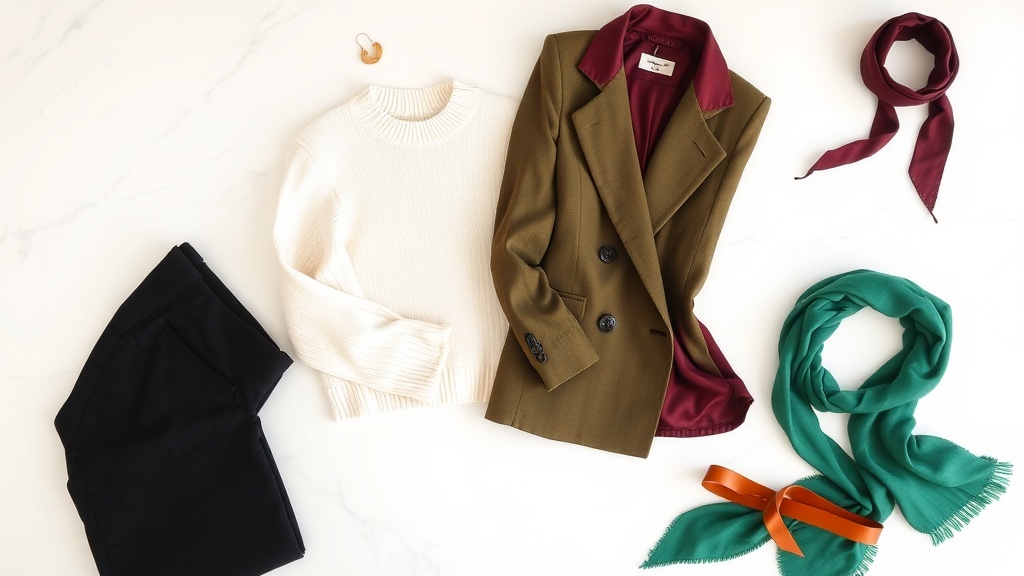
The 3-2 Color Rule: Stop Buying Clothes That Don't Match Anything You Own

The 3-2 Color Rule: Stop Buying Clothes That Don't Match Anything You Own
I used to own 14 tops in colors I loved individually and hated together.
A mustard blouse here, a dusty rose sweater there, a coral tank that seemed like a good idea in the dressing room. Each one looked great on the hanger. Together in my closet, they looked like a paint sampler wall at Home Depot.
And every morning, I'd stand in front of all that "variety" and reach for the same black tee.
If that sounds familiar, your problem isn't that you don't have enough clothes. It's that your clothes don't have a color system.
What a Color System Actually Is (And Isn't)
A color system is not a "seasonal palette." I'm not going to tell you you're a Deep Autumn or a Bright Spring or whatever. Those frameworks can be fun, but they're not practical for a Wednesday morning when you have 11 minutes and a toddler on your hip.
A color system is simpler: it's knowing which 5 colors make up 80% of your wardrobe so that almost anything you grab works with almost anything else you grab.
That's it. Five colors. Three neutrals, two accents. I call it the 3-2 Rule.
The 3-2 Rule Explained
Your 3 Neutrals
These are the bones of your wardrobe. They're the trousers, blazers, base layers, and coats. Pick three from this list:
- Black
- Navy
- Charcoal gray
- Tan / camel
- Ivory / off-white
- Olive
- Dark brown / espresso
The only rule: your three neutrals must all work together. Black + navy + charcoal? Works. Tan + ivory + olive? Works. Black + tan + ivory? Works beautifully.
Black + brown + navy all at once? That one's harder. Not impossible, but if you're building a system from scratch, don't start on hard mode.
Your 2 Accents
These are the pieces that make your outfits feel like yours. They show up in tops, scarves, bags, jewelry, and the occasional bold shoe.
Pick two colors that:
- You genuinely love wearing (not just looking at on Pinterest)
- Work with all three of your neutrals
- Work with each other
Some combinations I've seen work beautifully in real life:
- Black + navy + charcoal neutrals → burgundy + emerald accents
- Tan + ivory + olive neutrals → rust + dusty blue accents
- Black + ivory + navy neutrals → red + cobalt accents
- Charcoal + espresso + ivory neutrals → teal + blush accents
Notice what's not on any of those lists: neon anything, trendy seasonal colors you'll hate in four months, or that specific shade of lavender that only works with one skirt you own.
The Math Behind the 3-2 Rule
This is where I get excited, because The Math never lies.
If you have 3 neutral bottoms, 3 neutral base tops, and 4 accent tops, you already have:
- 3 × 7 = 21 outfit combinations from just 10 pieces
Add a third piece (blazer, cardigan, scarf) and those 21 combinations double.
Now compare that to a closet full of "interesting" colors that only pair with one or two other items. You might own 40 pieces and still only get 8 outfits out of them.
More clothes ≠ more outfits. More compatible clothes = more outfits.
How to Find Your 3 Neutrals
Open your closet right now (or picture it) and answer these three questions:
- What neutral do you already own the most of? That's Neutral #1. Don't fight it. If you've been gravitating toward navy for years, navy is your base.
- What neutral do you reach for when Neutral #1 feels too heavy or too dark? That's Neutral #2. It's your lighter or warmer counterbalance.
- What neutral fills the gap? If you have a dark and a light, you need a mid-tone. If you have two darks, you need something softer. That's Neutral #3.
For me, it's black, ivory, and olive. That trio covers every meeting, every errand, every Friday night that I didn't plan for.
How to Find Your 2 Accents
This is where people overcomplicate things. Here's my shortcut:
Look at your favorite going-out top. Not your work top. The one you reach for when you actually want to feel like yourself. That color? That's Accent #1.
Now look at your most-worn accessory. Your everyday bag, your favorite earrings, your go-to scarf. The color that keeps showing up? That's Accent #2.
You already know your accent colors. You just haven't named them yet.
The Closet Edit That Takes 20 Minutes
Once you've identified your 3-2 colors, do this:
- Pull out everything that doesn't fit your 5 colors. Don't throw it away. Just move it to one side of the closet or put it in a bin.
- Live with just your 3-2 wardrobe for two weeks. Notice how much faster you get dressed. Notice how many more outfits you actually have.
- After two weeks, check the reject pile. Did you miss anything? If yes, maybe that piece earns its way back in. If no—and this is what happens for most people—donate it without guilt.
I did this exercise three years ago and removed 23 items from my closet. I missed exactly one of them (a green striped shirt that, honestly, I only missed because of the memories attached to it, not because I ever wore it).
What About Prints and Patterns?
Prints work in a color system as long as they contain at least two of your five colors. A navy and ivory striped top? That's using two neutrals—perfect. A floral blouse in burgundy, black, and cream? If those are in your system, it works.
A random tropical print in colors you don't otherwise own? That's a vacation impulse buy, not a wardrobe piece. (No judgment. We've all been there. The Hawaiian shirt stays on the island.)
The Shopping Filter
This is honestly the biggest payoff of the 3-2 Rule. It transforms shopping from an emotional free-for-all into a 10-second decision:
Is this item in one of my 5 colors?
- Yes → try it on, check the fit, do the real life test
- No → put it back
No debate. No "but it's so pretty." No buying something gorgeous that will sit in your closet like a museum piece because it doesn't match a single thing you own.
I saved roughly $400 in the first three months after adopting this rule, just by walking past the things that weren't in my system. And I didn't feel deprived. I felt clear.
The CPW Bonus
When every piece works with more of your wardrobe, you wear each piece more often. That drives your Cost Per Wear down fast.
A $45 accent top that pairs with all 3 of your neutral bottoms and both your blazers? You'll wear it once a week. After 10 weeks, that's $4.50 per wear and dropping. After a full season, you're under $2.
Compare that to a $45 top in a random color that only works with your black pants. You wear it every other week if you remember it exists. After 10 weeks, that's $9 per wear. Same price tag, double the cost.
One Last Thing
The 3-2 Rule isn't about restriction. It's about building a closet where the pieces actually talk to each other instead of just coexisting.
You're not limiting your style. You're giving it a language.
Start with what you already own. Name your 3 neutrals and 2 accents. Shove the outliers aside for two weeks. See what happens.
I think you'll find you had a great wardrobe hiding behind a bunch of beautiful strangers.