Building a Signature Scent Wardrobe for Every Occasion

Imagine walking into a high-stakes boardroom meeting in Chicago, wearing a perfectly tailored charcoal blazer and a crisp white silk blouse. You feel prepared, but as you sit down, you realize the heavy, cloying scent of a vanilla-based perfume you applied that morning is clashing with the professional atmosphere. It feels intrusive, almost as loud as a bright neon tie in a room of neutrals. Conversely, imagine a Saturday afternoon at a botanical garden in Savannah, where a heavy, spicy oud fragrance feels suffocentially dense against the humid, floral air. These moments of "scent mismatch" occur because we often treat perfume as a singular accessory rather than a functional component of our daily toolkit.
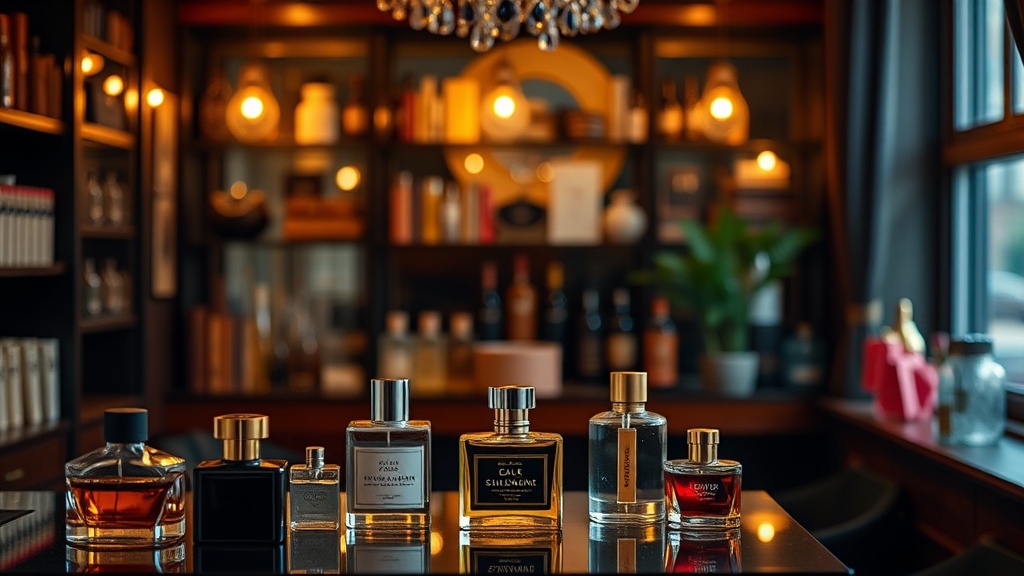
In the world of style systems, we talk extensively about the math of a wardrobe—how a versatile navy blazer or a high-quality white tee provides more value than a single-use trend piece. The same logic applies to fragrance. You do not need a collection of fifty bottles to be "fragrance savvy." Instead, you need a curated scent wardrobe: a small, intentional collection of high-quality fragrances categorized by their olfactory weight and the environments they serve. By treating scent as a strategic layer rather than an afterthought, you ensure your presence is always calibrated to your setting.
The Fundamentals: Understanding Olfactory Families
Before building your collection, you must understand the building blocks. Fragrances are categorized into families, and each family carries a different "social volume." To build a functional wardrobe, you should be able to identify at least four key categories:
- Citrus/Fresh: These are light, bright, and often feature notes of bergamot, lemon, or neroli. They are the "white t-shirts" of the fragrance world—clean, uncomplicated, and non-offensive.
- Floral: Ranging from single-note rose to complex white florals like jasmine or tuberose. These are versatile but can vary significantly in intensity.
- Woody/Oriental: These feature deeper notes like sandalwood, cedar, patchouli, or amber. They possess more "weight" and are better suited for cooler weather or evening settings.
- Gourmand: These are the "sweet" scents, often featuring vanilla, chocolate, or honey. While comforting, they can be polarizing in professional or formal environments.
Just as you wouldn't wear a sequined cocktail dress to a grocery run, you shouldn't wear a heavy gourmand to a midday yoga class or a bright citrus to a formal black-tie gala. The goal is alignment.
Step 1: The Professional Anchor (The "Office" Scent)
Your professional scent should act as a subtle enhancement to your presence, not a distraction. In a professional setting, your goal is to project competence and composure. This means choosing scents with "low sillage"—the term for the trail a perfume leaves behind. You want people to catch a hint of you when you walk past, rather than being hit by a cloud of scent when you enter the room.
The Profile: Look for "clean" notes. Think of the scent of high-quality soap, fresh linens, or light woods. Notes of iris (which provides a powdery, sophisticated feel) or vetiver (which adds an earthy, grounded quality) are excellent choices.
Concrete Examples:
- Jo Malone London Wood Sage & Sea Salt: This is a masterclass in subtlety. It is earthy and fresh without being overly sweet or heavy.
- Prada Les Infusions de l'Iris: This offers a sophisticated, "clean laundry" vibe that feels polished and expensive without being loud.
- Glossier You: A modern staple that relies heavily on ambroxan and musk to create a "skin-but-better" scent that is incredibly unobtrusive.
Step 2: The Weekend Ease (The "Casual" Scent)
When you are off the clock—perhaps running errands in a local farmers' market or grabbing coffee with a friend—your scent should reflect relaxation and ease. This is where you can lean into brighter, more energetic notes that feel uplifting.
The Profile: Citrus, green tea, and light aquatic notes work best here. These scents feel breezy and unpretentious. They pair perfectly with a casual outfit of denim and a high-quality knit sweater. If you are building a minimalist capsule wardrobe, these scents will complement that sense of effortless simplicity.
Concrete Examples:
- Elizabeth Arden Green Tea: An affordable, classic option that is incredibly refreshing and light.
- Acqua di Parma Colonia: A bright, citrus-forward scent that feels like a Mediterranean summer morning.
- Byredo Gypsy Water: A slightly more "cool-girl" option that mixes citrus with light pine and vanilla, making it perfect for a relaxed outdoor brunch.
Step 3: The Evening Statement (The "Occasion" Scent)
Evening calls for depth. Whether you are attending a gallery opening, a formal dinner, or a night out at a cocktail lounge, your fragrance can afford to have more "projection" and a more complex narrative. This is the time to use the heavier hitters in your collection.
The Profile: Look for spice, resin, deep florals, or oud. These notes have the structural integrity to stand up to the richness of evening attire, such as silk slip dresses or velvet blazers. The scent should feel like an intentional part of your evening "costume."
Concrete Examples:
- Yves Saint Laurent Black Opium: A potent gourmand with coffee and vanilla notes that commands attention in a social setting.
- Tom Ford Black Orchid: A dark, mysterious, and highly complex scent that is unapologetically bold.
- Diptyque Do Son: If you prefer florals, this tuberose-heavy scent provides a lush, dramatic elegance that feels very "evening."
The Math of Application: Longevity and Proportions
One of the biggest mistakes in fragrance usage is the "over-application" error. Just as you wouldn't wear a heavy winter coat in July, you shouldn't over-apply a heavy scent in a confined space. To manage your scent wardrobe effectively, follow these three technical rules:
1. The Pulse Point Strategy
Apply fragrance to pulse points—areas where the blood vessels are closest to the skin, generating heat. This helps the scent radiate. Common spots include the wrists, the base of the throat, and behind the ears. However, if you are wearing a heavy evening scent, apply it to the back of the neck or even the hair to prevent it from being too "in your face" during conversation.
2. The Layering Technique
To make a scent last longer without increasing the volume, use a scentless moisturizer or a matching body lotion before applying your perfume. Fragrance clings to moisture. If you have dry skin, the alcohol in the perfume will evaporate quickly, causing the scent to disappear. A well-moisturized base ensures your "investment" lasts through a full workday.
3. The Environment Check
Before you spray, do a quick mental check of your environment.
- Is it an enclosed space? (Office, airplane, car) $\rightarrow$ Go light/citrus.
- Is it an open space? (Outdoor wedding, park, beach) $\rightarrow$ You can go slightly heavier.
- Is it a high-sensory space? (Fine dining restaurant) $\rightarrow$ Keep it to a single spray or a lower-projection scent.
Curating Your Collection: The Quality Over Quantity Rule
I often tell my clients that a collection of three exceptional, purposeful fragrances is infinitely better than a dozen mediocre ones. When you shop, avoid the temptation to buy "dupes" or low-quality scents just because they are inexpensive. Low-quality fragrances often use synthetic fixatives that can smell "scratchy" or medicinal as they dry down.
Instead, invest in one high-quality "Signature" scent—something that feels uniquely you—and then build your functional categories around it. A high-quality bottle from a house like Le Labo or Chanel might have a higher upfront cost, but the complexity of the notes and the longevity of the wear mean you will use far less product over time. It is the "cost-per-wear" logic of the fragrance world.
"Style is not just about what you wear; it is about the entire sensory experience you present to the world. A curated scent wardrobe ensures that your invisible accessory is as intentional as your visible one."
By categorizing your scents into Professional, Casual, and Evening, you move away from the haphazard application of perfume and toward a disciplined, strategic approach to personal branding. You aren't just wearing a scent; you are choosing the right tool for the job.
Steps
- 1
Identify Your Fragrance Family
- 2
Select Seasonal Scents
- 3
Master the Art of Layering
- 4
Store Your Collection Properly